Laser‑assisted in situ keratomileusis, better known as LASIK eye surgery, has revolutionized vision correction. It offers millions of people freedom from glasses and contact lenses by reshaping the cornea with lasers to correct refractive errors such as myopia (nearsightedness), hyperopia (farsightedness), and astigmatism. Over the past three decades, advancements in technology and surgical technique have made LASIK safer, more predictable, and more precise than ever.
Despite its popularity, LASIK remains a medical procedure that requires careful decision‑making. One of the most important steps is choosing a highly skilled surgeon and understanding the true cost of treatment — which varies significantly across clinics, countries, and technologies used.
This comprehensive article will cover:
- What LASIK surgery is and how it works
- Who qualifies for LASIK
- Factors that determine LASIK cost
- Cost comparison across countries and regions
- Best LASIK eye surgeons and influential experts
- Technology differences that impact quality and price
- Risks, side effects, and how to minimize complications
- What to expect before, during, and after surgery
- Financing, insurance, and payment options
- Practical tips for selecting a surgeon and clinic
By the time you finish reading, you’ll be equipped with everything needed to make a fully informed decision about LASIK — from both medical and financial perspectives.
1. Understanding LASIK Eye Surgery
What LASIK Does
LASIK is a surgical procedure that corrects vision by reshaping the cornea — the clear, front surface of the eye — so that light entering the eye focuses correctly on the retina. Poor focus results in refractive errors:
- Myopia (nearsightedness): Distant objects appear blurry
- Hyperopia (farsightedness): Close objects are hard to see
- Astigmatism: Uneven curvature of the cornea causing distorted vision
How LASIK Works — Step by Step
- Pre‑operative Evaluation: Eye measurements, corneal mapping, pupil size calculation, and tear film assessment
- Creation of Corneal Flap: A thin flap is created on the cornea using a femtosecond laser or microkeratome blade
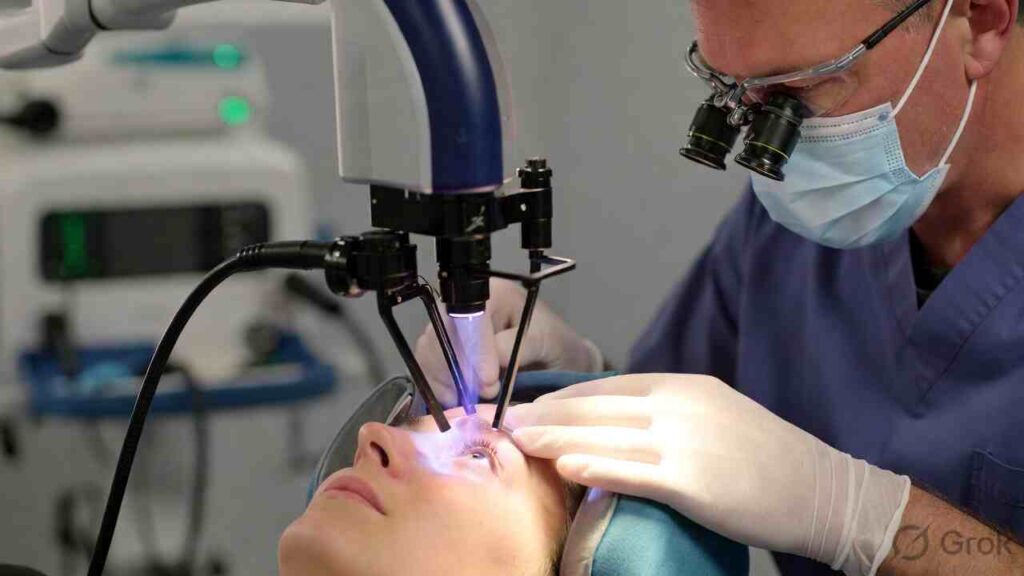
- Laser Reshaping: An excimer laser removes microscopic amounts of corneal tissue to reshape the cornea to correct refractive error
- Flap Repositioning: The flap is repositioned without stitches, creating a natural bandage
- Recovery: Vision typically improves within hours and continues to stabilize over weeks
This combination of precision imaging and laser delivery has made LASIK one of the most performed elective surgeries worldwide.
2. Who Is a Good Candidate for LASIK?
Not everyone qualifies for LASIK. Ideal candidates generally meet the following criteria:
- Age 18 or older with stable vision
- Healthy corneas without scarring or disease
- Adequate corneal thickness for safe reshaping
- No severe dry eye syndrome
- Refractive error within treatable range
- Realistic expectations about outcomes
High prescriptions, very thin corneas, autoimmune diseases, pregnancy, and certain eye conditions like keratoconus may disqualify candidates. In such cases, alternative procedures like PRK, SMILE, or implantable lenses may be recommended.
3. Technology That Drives Safety and Precision
Advanced technology makes a substantial difference in outcomes and pricing. Leading LASIK centers use combinations of:
Wavefront‑Guided LASIK
Uses detailed wavefront maps to customize treatment for subtle corneal irregularities, reducing higher‑order aberrations and enhancing night vision.
Topography‑Guided LASIK
Uses precise corneal surface maps to plan individualized treatments, especially effective for irregular corneas.
Femtosecond Laser
Creates the corneal flap with a laser instead of a blade, increasing precision and safety.
Eye‑tracking Systems
Track eye movements in real time during treatment, ensuring accurate laser delivery.
The more advanced the system, the higher the cost — but also the greater the likelihood of optimal outcomes with fewer side effects.
4. Factors That Influence LASIK Cost
A wide range of variables determine LASIK pricing. Understanding them helps patients make informed financial decisions:
A. Technology Used
- Blade LASIK (microkeratome): Lower cost
- All‑laser LASIK (femtosecond + excimer): Premium pricing
- Wavefront or topography‑guided customization: Additional cost
B. Surgeon Experience & Reputation
Surgeons with decades of experience and published outcomes often command higher fees.
C. Clinic Location
Premium clinics in major metropolitan areas typically charge more than smaller regional centers.
D. Pre‑Operative Testing
Comprehensive evaluations using advanced diagnostic tools may be included or charged separately.
E. Post‑Op Care
Included follow‑up visits, enhancement procedures, and care packages vary between clinics and affect total cost.
F. Volume and Branding
High‑volume LASIK centers offering standard treatment at scale may cost less, whereas boutique clinics focused on personalized care may charge more.
5. Cost Breakdown: Global Comparison
Although pricing fluctuates by region, the following provides a useful estimation of LASIK costs in key regions:
A. United States
- Basic LASIK: $1,500 – $2,500 per eye
- All‑Laser LASIK (Femtosecond + Excimer): $2,000 – $3,500 per eye
- Wavefront/Topography‑Guided LASIK: $2,500 – $4,000+ per eye
Most clinics quote per‑eye pricing, so bilateral treatment may cost double.
B. India
- Standard LASIK: ₹25,000 – ₹40,000 per eye (~$300 – $500)
- Femtosecond/All‑Laser LASIK: ₹40,000 – ₹75,000 per eye (~$500 – $950)
- Advanced Custom LASIK: ₹70,000 – ₹1,00,000 per eye (~$900 – $1,300)
India’s costs reflect efficient healthcare delivery, lower clinic overheads, and competitive markets.
C. Europe (General Range)
- Standard LASIK: €800 – €1,500 per eye
- Advanced Custom LASIK: €1,500 – €3,000 per eye
Pricing varies significantly across countries depending on healthcare systems and competition.
6. How Costs Compare — India vs. USA
| Component | India (Approx.) | USA (Approx.) |
|---|---|---|
| Standard LASIK per eye | $300 – $500 | $1,500 – $2,500 |
| All‑Laser (Femtosecond) | $500 – $950 | $2,000 – $3,500 |
| Wavefront/Topo‑Guided | $900 – $1,300 | $2,500 – $4,000+ |
| Diagnostic Evaluation | Often included | May be separate |
| Follow‑Up Care | Included in many packages | Often included, varies |
The cost in India is typically 1/4 to 1/5 of the cost in the USA for equivalent technology and care. This price difference, combined with quality clinics, has made India an attractive destination for medical tourism in refractive surgery.
7. Top LASIK Eye Surgeons & Clinics
Selecting the right surgeon is as important as understanding costs. Below are some of the most respected surgeons and clinics known for excellence in refractive surgery. They represent regional excellence, reputation, and significant experience.
United States
Dr. Steven Schallhorn
- Pioneer in wavefront‑guided LASIK
- Known for customized surgery planning and high patient satisfaction
Dr. Raymond Stein
- Expert refractive surgeon with decades of experience
- Specializes in advanced treatments and patient evaluation
Dr. Kerry Assil
- Early adopter of bladeless LASIK with published clinical results
- Focus on safety and visual quality
The LASIK Vision Institute
- Large network of centers across the U.S.
- High patient volume and standardized quality
India
Dr. Ganesh Pai
- Reputed refractive surgeon with strong patient outcomes
- Uses advanced femtosecond and topography‑guided techniques
Dr. R. A. Shroff
- Pioneer in laser eye surgery in India
- Focus on personalized evaluations
Vision Care & Hypermetropia Clinics
- Multiple centers with experienced teams
- Known for comprehensive pre‑op testing
Europe & Middle East
Dr. Majid Moshirfar
- Known globally for LASIK and surface ablation expertise
- Strong clinical track record
Dr. Costas Pardalis (Greece)
- Skilled in advanced corneal refractive procedures
These surgeons and clinics have built reputations through thousands of procedures, robust safety standards, and patient‑centric care.
8. LASIK Success Rates & Long‑Term Results
LASIK is one of the most studied vision correction surgeries in medicine. Outcomes show:
- 90%+ of patients achieve 20/20 vision or better
- Many patients achieve visual acuity of 20/40 or better — legally acceptable for driving without glasses
- Most patients experience rapid improvement within 24–48 hours
- Long‑term stability is common, with many seeing improved vision for a decade or more
Success rates are higher when:
- Pre‑operative evaluation is thorough
- Technology used matches individual eye characteristics
- Patients follow post‑op care instructions
9. Risks, Side Effects & How to Minimize Them
LASIK is generally safe, but risks exist with any surgical procedure.
Common Temporary Side Effects
- Dry eyes
- Light sensitivity
- Glares / Halos around lights
- Mild discomfort
Rare Complications
- Flap irregularities
- Under‑ or over‑correction
- Infection
- Vision distortion
Risk Minimization
- Choose a surgeon with strong outcomes and experience
- Follow pre‑ and post‑operative instructions precisely
- Avoid rubbing eyes during recovery
- Attend all follow‑up appointments
Careful patient selection and advanced diagnostic testing minimize risk significantly.
10. What to Expect Before, During & After LASIK
Before Surgery
- Detailed eye exam
- Discussion of vision goals and risks
- Selection of appropriate LASIK technology
During Surgery
- Outpatient and typically completed within 15–30 minutes
- Local anesthetic eye drops used
- Patients usually comfortable and awake
After Surgery
- Vision may be hazy initially
- Most patients resume normal activities within a day
- Follow‑up appointments monitor healing
Patients are advised to avoid strenuous activity and water exposure (swimming, hot tubs) for a few weeks.
11. Financing & Insurance Options
LASIK is often considered elective, meaning many insurance plans classify it as optional and do not cover it.
Financing Options
- Payment plans through clinics
- Medical finance companies offering low‑interest plans
- Personal savings or health savings accounts (where permitted)
Some employers provide vision benefits that include partial LASIK reimbursement.
12. Making the Right Decision: Key Questions to Ask
Before booking LASIK, consider asking:
- What technology will you use?
- What are your personal success rates?
- What is included in the quoted cost?
- How many follow‑up visits are included?
- What is the enhancement policy if additional treatment is needed?
- What comfort options are available?
13. LASIK Alternatives
Not all patients are candidates for LASIK. Alternatives include:
- PRK (Photorefractive Keratectomy): Surface laser treatment, suitable for thinner corneas
- SMILE (Small Incision Lenticule Extraction): Minimally invasive alternative with no flap
Surgeons will determine the best procedure based on corneal thickness, prescriptions, and lifestyle.
14. Future of Refractive Surgery
Emerging technologies — including improved laser platforms, AI‑assisted diagnostics, and refinements in customization — continue to make vision correction safer and more precise. Research into corneal biomechanics and new surgical techniques suggests even better outcomes in the years ahead.
Conclusion
LASIK eye surgery has transformed modern vision care by enabling millions of people to achieve near‑perfect eyesight without glasses or contacts. Choosing the right surgeon and understanding the costs — which range widely between regions and technologies — is essential for achieving excellent results.
Costs in the USA are significantly higher due to advanced infrastructure, regulatory rigor, and clinician expertise, while India offers high‑quality care at a fraction of the price, making it an attractive option for many patients.
Careful screening, advanced technology, experienced surgeons, and realistic expectations combine to ensure the best outcomes. With thorough research and informed decision‑making, LASIK can be a life‑changing investment in your vision and quality of life.